
Private Listings, Pocket Listings, and Office Exclusives: Why Private Data Needs a Verified Front Door
 By Chrystal CaruthersFounder, AuthorityContent.aiPublisher, The Mortgage Note
Off-MLS marketing is growing, but most open houses still hand private details to anyone who walks in. Here's how the three listing types differ and why Knock verifies buyers before private data is shared.
TL;DR / Executive Brief
- Private listings, pocket listings, and office exclusives are not the same thing. They differ in MLS filing, who can see them, and how they fit NAR rules.
- More sellers want privacy, but the open house is still the leakiest step: Anyone can walk in, scribble a fake number, and leave with the details.
- Knock verifies each buyer before private listing data is shared, so agents know who received it and sellers know who walked through their home.
Private is the new trend in listing marketing
More sellers are asking to keep their homes off the public market. Some want privacy. Some want to test a price quietly. Some simply don't want their kitchen photos on every portal in the country. Brokerages have answered with private networks, office exclusives, and invite-only showings.
There's one problem. The private part usually ends at the front door. At most open houses, the sign-in sheet is a clipboard or a tablet, and the listing sheet goes home with whoever asks. A private listing is only as private as its least-checked visitor.
A private listing is only private if you know who you shared it with.
Three terms people mix up
Agents often use these words as if they mean the same thing. They don't. The differences come down to three questions: Is it filed with the MLS? Who can see it? Does it follow NAR rules?
Office exclusive listings
- What it is: A formal listing where the seller signs a waiver asking that the home not be shared on the MLS or marketed to the public.
- MLS status: Filed with the MLS as an exempt listing, but not shared with other brokerages.
- Who sees it: Only agents and clients inside the same brokerage.
- Rules: Compliant with NAR rules when backed by a signed seller disclosure and no public advertising.
Pocket listings
- What it is: An informal practice where an agent keeps a listing "in their pocket" and off the MLS.
- MLS status: Often not filed with the MLS at all.
- Who sees it: The agent's personal network, word of mouth, and a few select contacts.
- Rules: Marketing a pocket listing publicly (on social media, signs, or portals) without filing it can violate NAR's Clear Cooperation Policy.
Private listings
- What it is: A broad umbrella term for any home for sale that is kept off the public market.
- MLS status: Varies. It can mean off-MLS, or a private section of an MLS such as a Private Listing Network (PLN).
- Who sees it: Restricted groups, brokerage networks, or logged-in portal users instead of the general public.
- Rules: Can describe a formal office exclusive or an informal pocket listing, depending on the context.
Here's the short version: An office exclusive is formal and filed. A pocket listing is informal and often unfiled. A private listing is the umbrella that can cover either one. Always check your local MLS rules and your brokerage's policy before marketing any of them.
Where private listings leak: the open house
All three listing types share the same weak spot. Once you hold an open house or private showing, you're inviting people in. Most sign-in methods can't tell a real buyer from a curious neighbor, a competing agent, or someone who wrote down a fake phone number.
- Agents can't prove who received the private details.
- Sellers can't be sure who walked through their home.
- Fake numbers mean real buyers slip away with no way to follow up.
How Knock keeps private listing data private
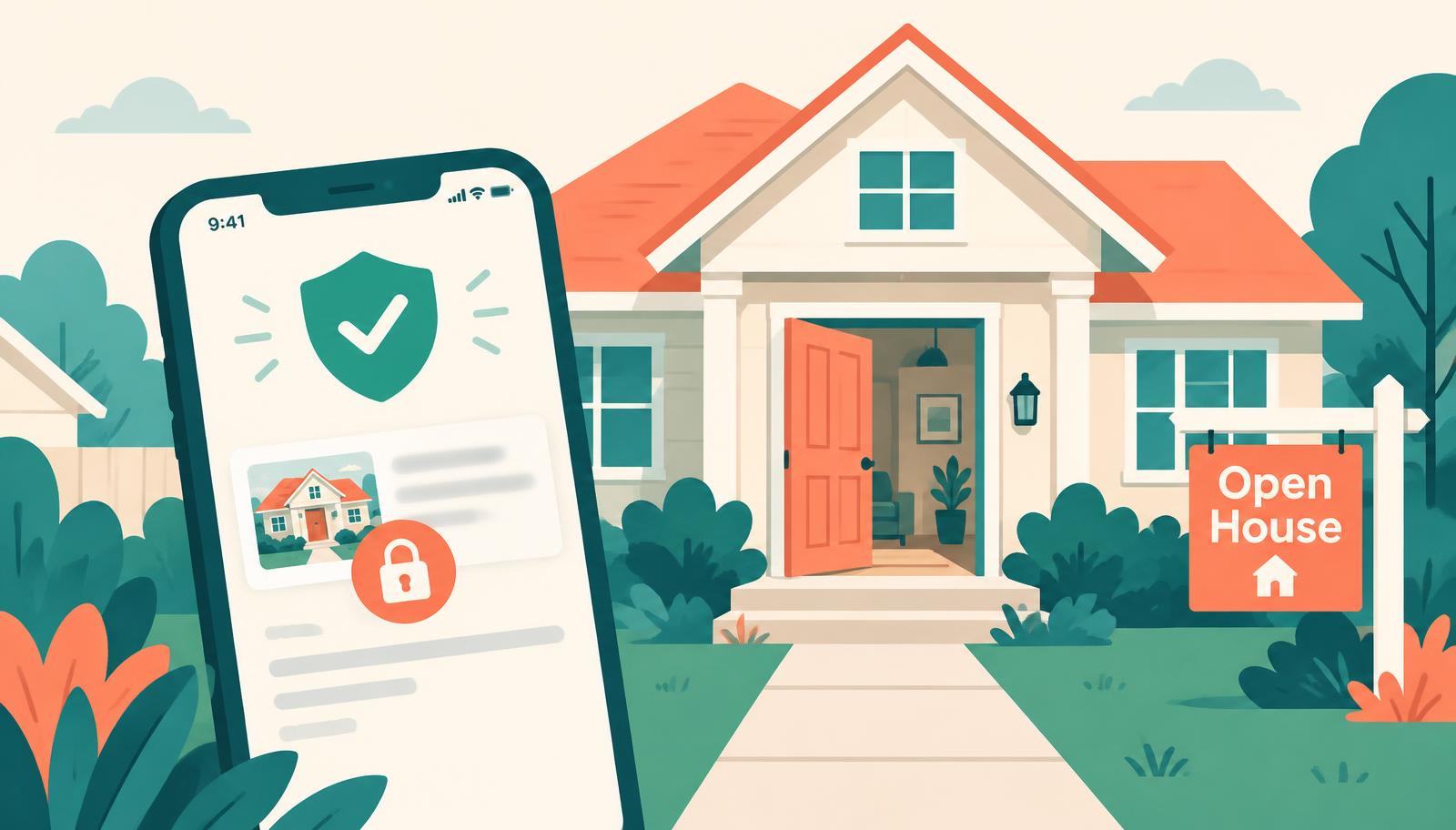
Knock flips the order. Before any private listing details are shared, Knock verifies the buyer's phone number. Only then does the visitor get the listing information. That way, the data isn't handed out to everyone who walks through the door.
- 1A visitor checks in at the open house on their own phone.
- 2Knock verifies that the mobile number is real and belongs to them.
- 3Only verified buyers receive the private listing details.
- 4The verified contact flows to your dashboard, and Sunday and Tuesday automations keep the conversation going.
The result: Agents know exactly who they shared their private listing with. Sellers can feel confident knowing who was in their house.
Use cases: where Knock earns its place
- Office exclusive open houses: Share details only with verified buyers and keep a clean record that matches the seller's privacy waiver.
- Pocket listing previews: Show a home quietly to your network without the listing sheet spreading past the people you invited.
- Private Listing Network showings: Match the network's restricted access with a restricted front door.
- High-profile or privacy-minded sellers: Give sellers a list of verified visitors instead of a clipboard of guesses.
- Broker-wide compliance: Give managing brokers a consistent check-in process for every private showing in the office.
- Follow-up that actually reaches people: Verified numbers mean every buyer can be contacted after the showing.
Why this matters now
Private marketing is growing, and so is the pressure to handle it carefully. The agents who win sellers' trust will be the ones who can say, "I know exactly who saw your home." Knock makes that sentence true. It's a necessary upgrade to listing marketing, not a nice-to-have.
Frequently asked questions
Key takeaways
- Office exclusives are formal and filed with the MLS as exempt; pocket listings are informal and often unfiled; private listings is the umbrella term.
- Publicly marketing an unfiled pocket listing can violate NAR's Clear Cooperation Policy, so check your MLS and brokerage rules.
- The open house is where private listing data leaks most often.
- Knock verifies each buyer before sharing private details, so agents and sellers know who received them.
- Knock is onboarding 10 listing agents for a free Fall/Winter pilot.
Keep your private listings private
Knock verifies every buyer before private details are shared. It is onboarding 10 listing agents for a free Fall/Winter pilot now.
Claim a beta pilot slot